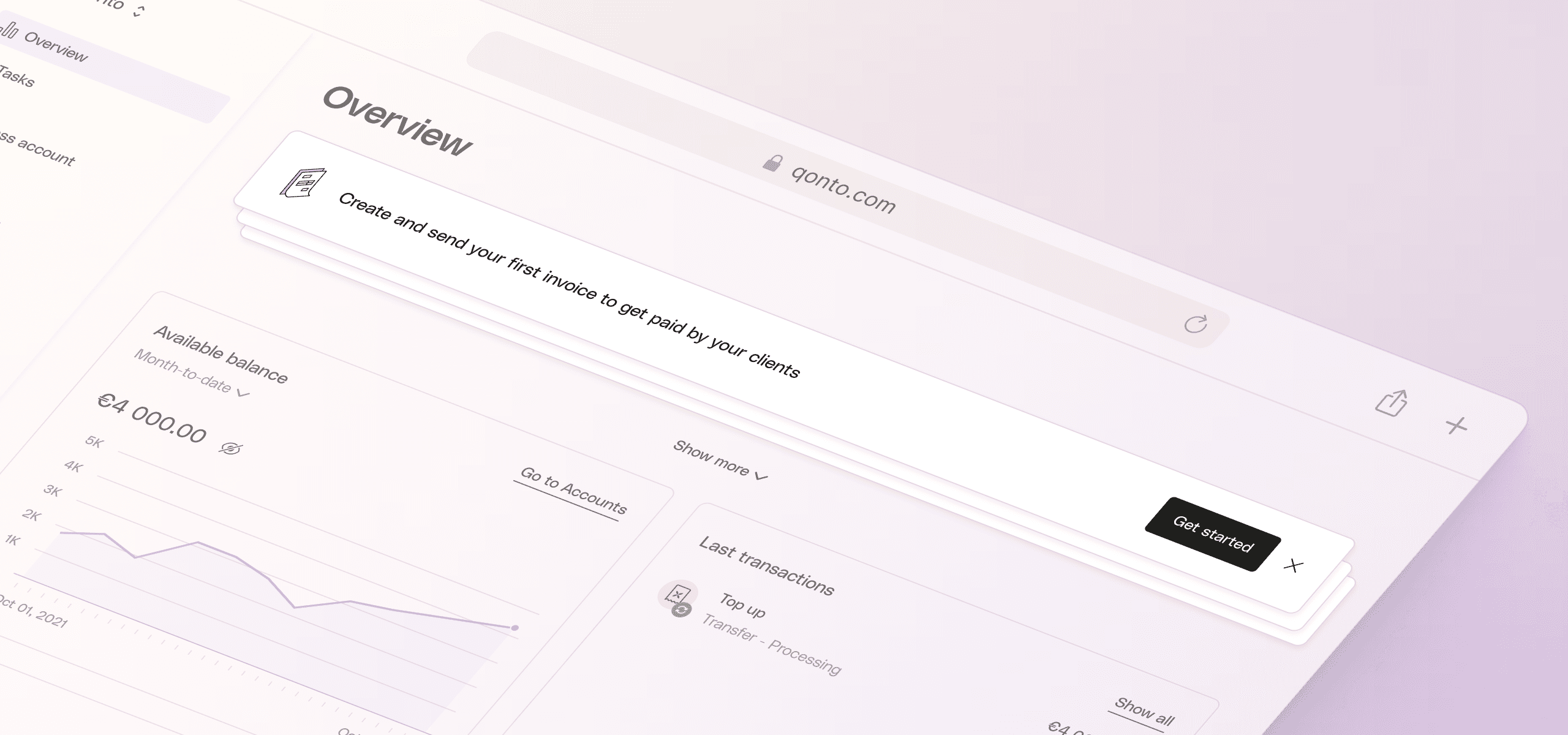
Unlocking Adoption: Redesigning Qonto’s Product Discovery System
The mission: Rethink how 600,000+ businesses discover and engage with Qonto’s financial features to solve a major adoption gap.
As Lead Designer, I led the shift to a scalable, personalized platform, boosting feature discovery to 40%+, cutting costs by 80%, and enabling autonomous team iteration.
The mission: Rethink how 600,000+ businesses discover and engage with Qonto’s financial features to solve a major adoption gap.
As Lead Designer, I led the shift to a scalable, personalized platform, boosting feature discovery to 40%+, cutting costs by 80%, and enabling autonomous team iteration.
YEAR
2024
2024
CLIENT
Qonto
Qonto
TEAM
Cross-functional team: PM, Engineers, UX Writers, Product Marketing Managers
Cross-functional team: PM, Engineers, UX Writers, Product Marketing Managers
EXPERTISES
Data Analysis, Product Design, Design System, Motion Design
Data Analysis, Product Design, Design System, Motion Design
Index
Shortcuts
Explorations
Final solution
Key results
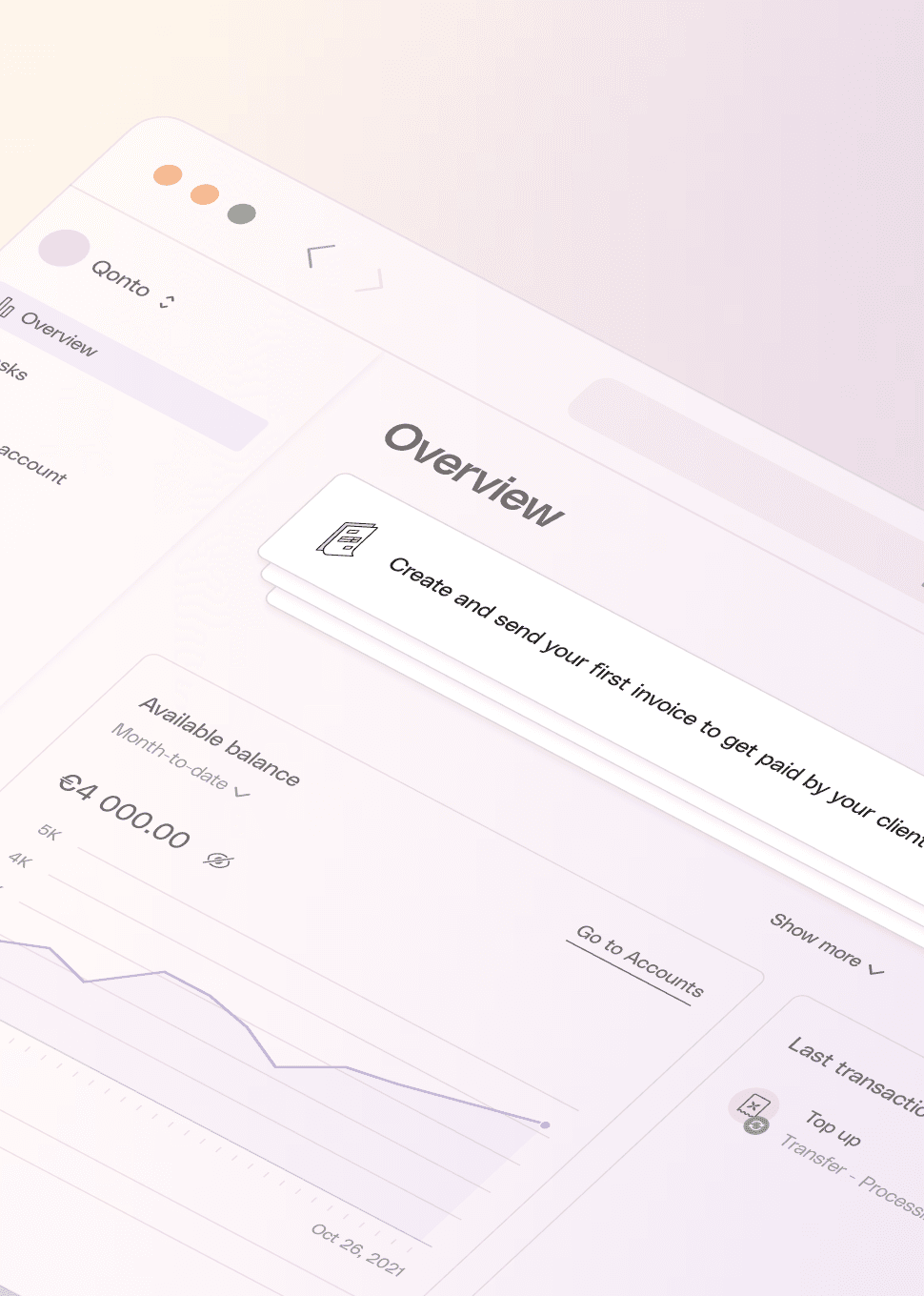
What were our challenges?
What were our challenges?
Early 2024: Qonto users are missing key tools.
Despite offering powerful invoicing, bookkeeping, and spend management features, only 5% find client invoicing and 9% discover supplier invoices in their first month.
Static, hardcoded onboarding left features buried.
Early 2024: Qonto users are missing key tools.
Despite offering powerful invoicing, bookkeeping, and spend management features, only 5% find client invoicing and 9% discover supplier invoices in their first month. Static, hardcoded onboarding left features buried.
Early 2024: Qonto users are missing key tools.
Despite offering powerful invoicing, bookkeeping, and spend management features, only 5% find client invoicing and 9% discover supplier invoices in their first month.
Static, hardcoded onboarding left features buried.
Increase non-banking features usage within 30 days
Increase non-banking features usage within 30 days
40%
40%
40%
EXPECTED
EXPECTED
EXPECTED
25%
25%
25%
CURRENT
CURRENT
CURRENT
Boost financial tool adoption without disrupting key setup steps (KYC, first income, card orders)
Boost financial tool adoption without disrupting key setup steps (KYC, first income, card orders)
Improve overall activation within 60 days
Improve overall activation within 60 days
+12%
+12%
+12%
EXPECTED
EXPECTED
EXPECTED
Boost financial tool adoption without disrupting key setup steps
(KYC, first income, card orders)
Boost financial tool adoption without disrupting key setup steps (KYC, first income, card orders)
Boost financial tool adoption without disrupting key setup steps
(KYC, first income, card orders)
Build a low-maintenance system for teams to create, test, and refine discovery actions
Build a low-maintenance system for teams
Build a low-maintenance system for teams
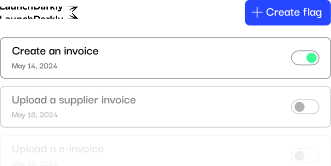
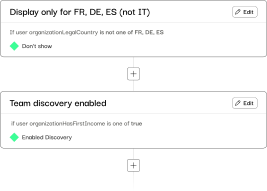
Customize actions based on user profile, plan, company, role, and features usage
Customize actions based on user profile, plan, role…
Customize actions based on user profile, plan, role…
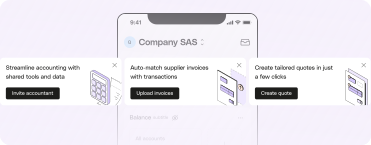
Ensure uniform activation and discovery experience across all Qonto platforms
Ensure uniform activation and discovery experience across all Qonto platforms
Ensure uniform activation and discovery experience across all Qonto platforms
Build a low-maintenance system for teams to create, test, and refine discovery actions
Customize actions based on user profile, plan, company, role, and features usage
Ensure uniform activation and discovery experience across all Qonto platforms
Why this adoption rate was so low?
Why this adoption rate was so low?
The design process began with deep user research that revealed critical insights:
- Only 17% of companies discovered client invoicing within 30 days after contract signed
- Only 9% discovered supplier invoices in the same period
- Users felt overwhelmed by the existing interface
- Mobile and web experiences were fragmented
- The old system was static and non-tailored to user needs
The design process began with deep user research that revealed critical insights:
- Only 17% of companies discovered client invoicing within 30 days after contract signed
- Only 9% discovered supplier invoices in the same period
- Users felt overwhelmed by the existing interface
- Mobile and web experiences were fragmented
- The old system was static and non-tailored to user needs
The design process began with deep user research that revealed critical insights:
- Only 17% of companies discovered client invoicing within 30 days after contract signed
- Only 9% discovered supplier invoices in the same period
- Users felt overwhelmed by the existing interface
- Mobile and web experiences were fragmented
- The old system was static and non-tailored to user needs
Navigation Blind Spots

Sabine
I was not aware that Qonto had invoicing capability as I only use mobile
Multi-Feature Adoption Gap

Paul
I discovered the supplier section speaking with my accountant, he recommended it to me
Navigation Blind Spots
Sabine
Sabine
I was not aware that Qonto had invoicing capability as I only use mobile
I was not aware that Qonto had invoicing capability as I only use mobile
Multi-Feature Adoption Gap
Paul
Paul
I discovered the supplier section speaking with my accountant, he recommended it to me
I discovered the supplier section speaking with my accountant, he recommended it to me
Static, unsegmented system

Daniel
Daniel
I don't want to go through the whole flow to understand what functionalities Qonto invoices includes and whether they fit my needs
I don't want to go through the whole flow to understand what functionalities Qonto invoices includes and whether they fit my needs
Static, unsegmented system
Daniel
I don't want to go through the whole flow to understand what functionalities Qonto invoices includes and whether they fit my needs
The foundation of the Product Discovery System emerged from comprehensive user research conducted during the New Navigation project, which revealed critical insights about feature discoverability.
Multi-Feature Adoption Gap
Paul
I discovered the supplier section speaking with my accountant, he recommended it to me
Navigation Blind Spots
Sabine
I was not aware that Qonto had invoicing capability as I only use mobile
Static, unsegmented system
Daniel
I don't want to go through the whole flow to understand what functionalities Qonto invoices includes and whether they fit my needs
How to craft this new Discovery System?
How to craft this new Discovery System?
We have followed a structured design methodology in 5 steps:
A structured design methodology in 5 steps
A structured design methodology in 5 steps
- Current Situation Mapping: Deep analysis from customers insights, data, to UX audit and product discrepancies.
- Competitor Analysis: UI/UX teardown of best-in-class examples.
- Design principles: Four foundational principles that would guide every of our decision.
- Prototyping: Clickable prototypes for validation and stakeholder alignment.
- Visual Design System Architecture: A two-tier card system with distinct visual hierarchy and components.
- Current Situation Mapping: Deep analysis from customers insights, data, to UX audit and product discrepancies.
- Competitor Analysis: UI/UX teardown of best-in-class examples.
- Design principles: Four foundational principles that would guide every of our decision.
- Prototyping: Clickable prototypes for validation and stakeholder alignment.
- Visual Design System Architecture: A two-tier card system with distinct visual hierarchy and components.
Get started page
Banners
Checklist
Walkthrough
Welcome screen
Welcome screen
Identify key patterns and
learn from “Best-in-class”
Identify key patterns &
learn from “Best-in-class”
Design Principles as
North Stars
Design Principle
Design Principle
Personalization
Personalization
Actions would be customized based on price plan, company type, user role, country, and feature usage, making every user's journey uniquely relevant.
Actions would be customized based on price plan, company type, user role, country, and feature usage, making every user's journey uniquely relevant.
Design Principle
Design Principle
Cognitive Load
Cognitive Load
Show only what's relevant and frequently needed. This meant dedicating space specifically for setup actions, creating clear navigation paths, and reducing information overload.
Show only what's relevant and frequently needed. This meant dedicating space specifically for setup actions, creating clear navigation paths, and reducing information overload.
Design Principle
Design Principle
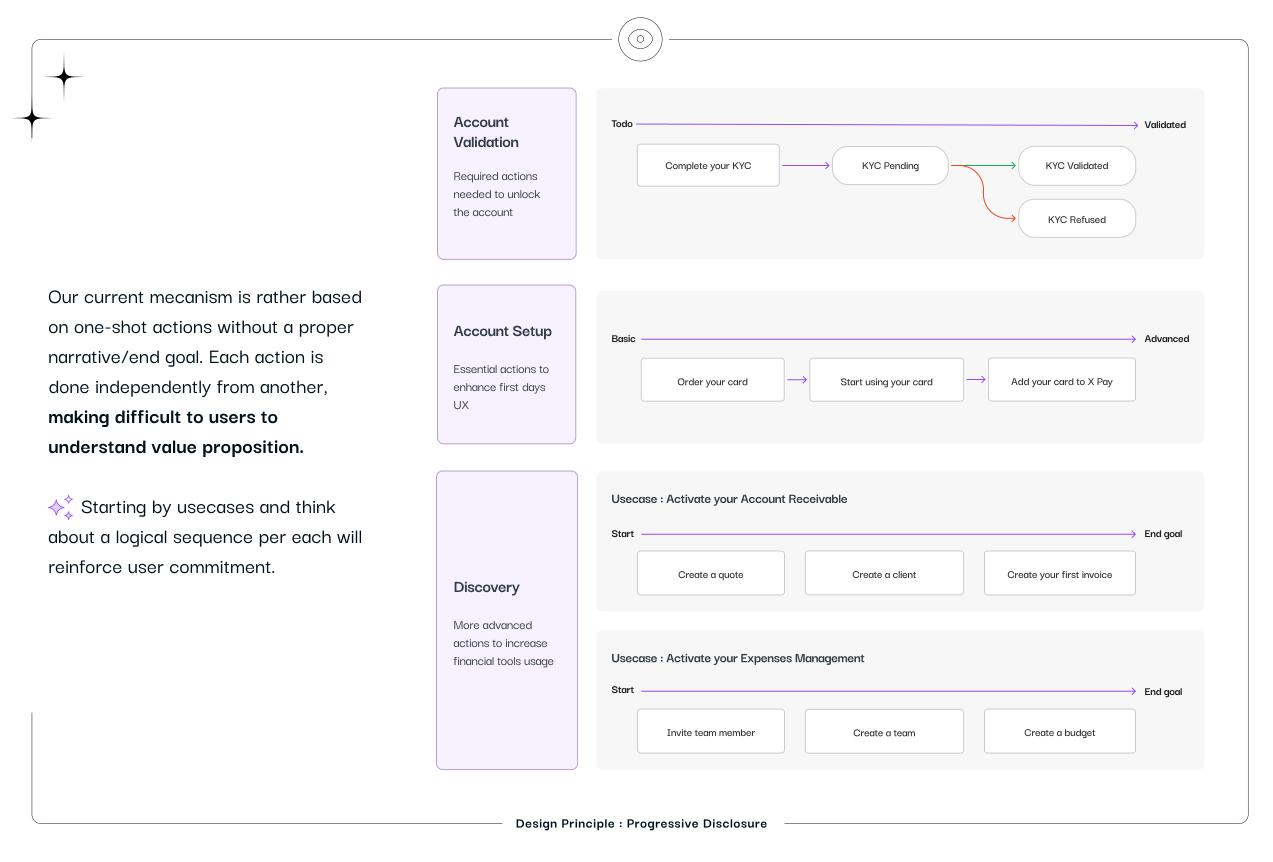
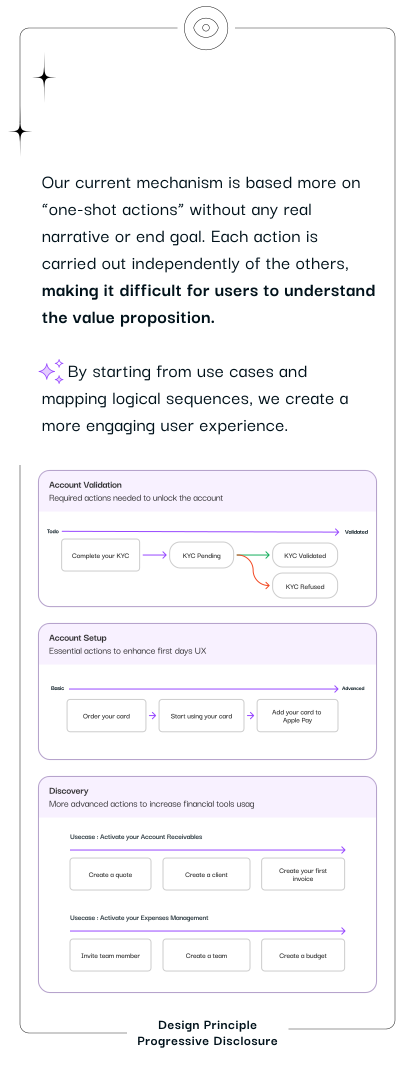
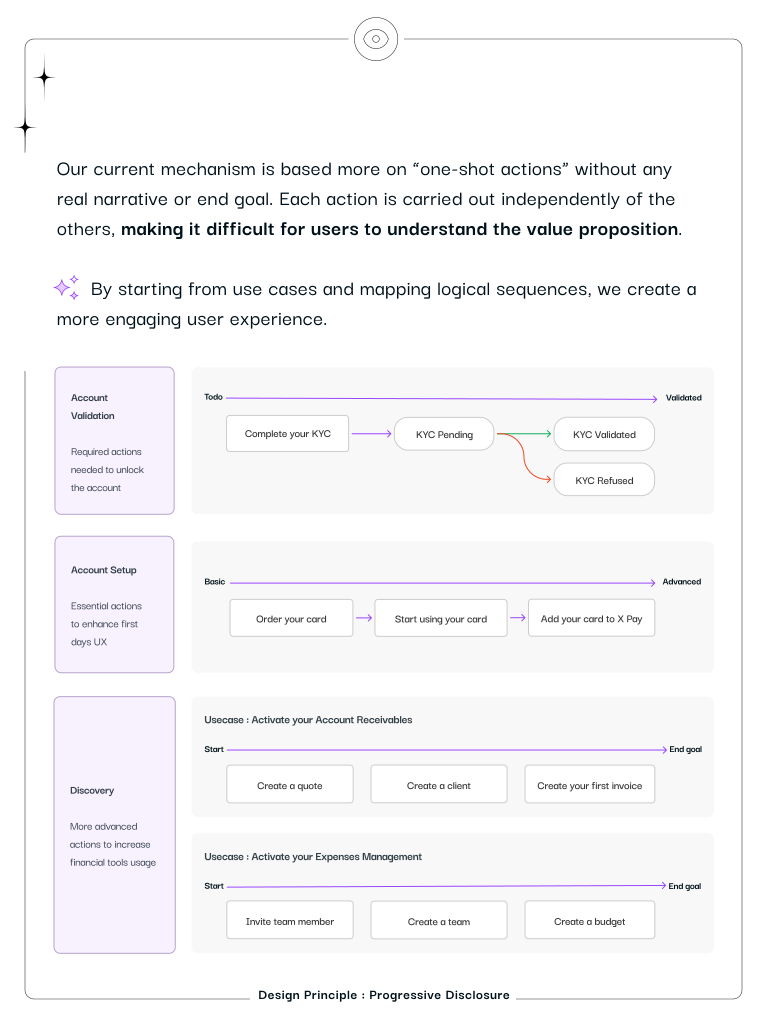
Progressive Disclosure
Progressive Disclosure
Features would be revealed gradually: basic actions first, advanced features later. This kept the interface simple for newcomers while progressively empowering experienced users.
Features would be revealed gradually: basic actions first, advanced features later. This kept the interface simple for newcomers while progressively empowering experienced users.
Systemic approach
and modularity
Design Principles as
North Stars
Design Principle
Personalization
Actions would be customized based on price plan, company type, user role, country, and feature usage, making every user's journey uniquely relevant.
Design Principle
Cognitive Load
Show only what's relevant and frequently needed. This meant dedicating space specifically for setup actions, creating clear navigation paths, and reducing information overload.
Design Principle
Progressive Disclosure
Features would be revealed gradually: basic actions first, advanced features later. This kept the interface simple for newcomers while progressively empowering experienced users.
Systemic approach
and modularity
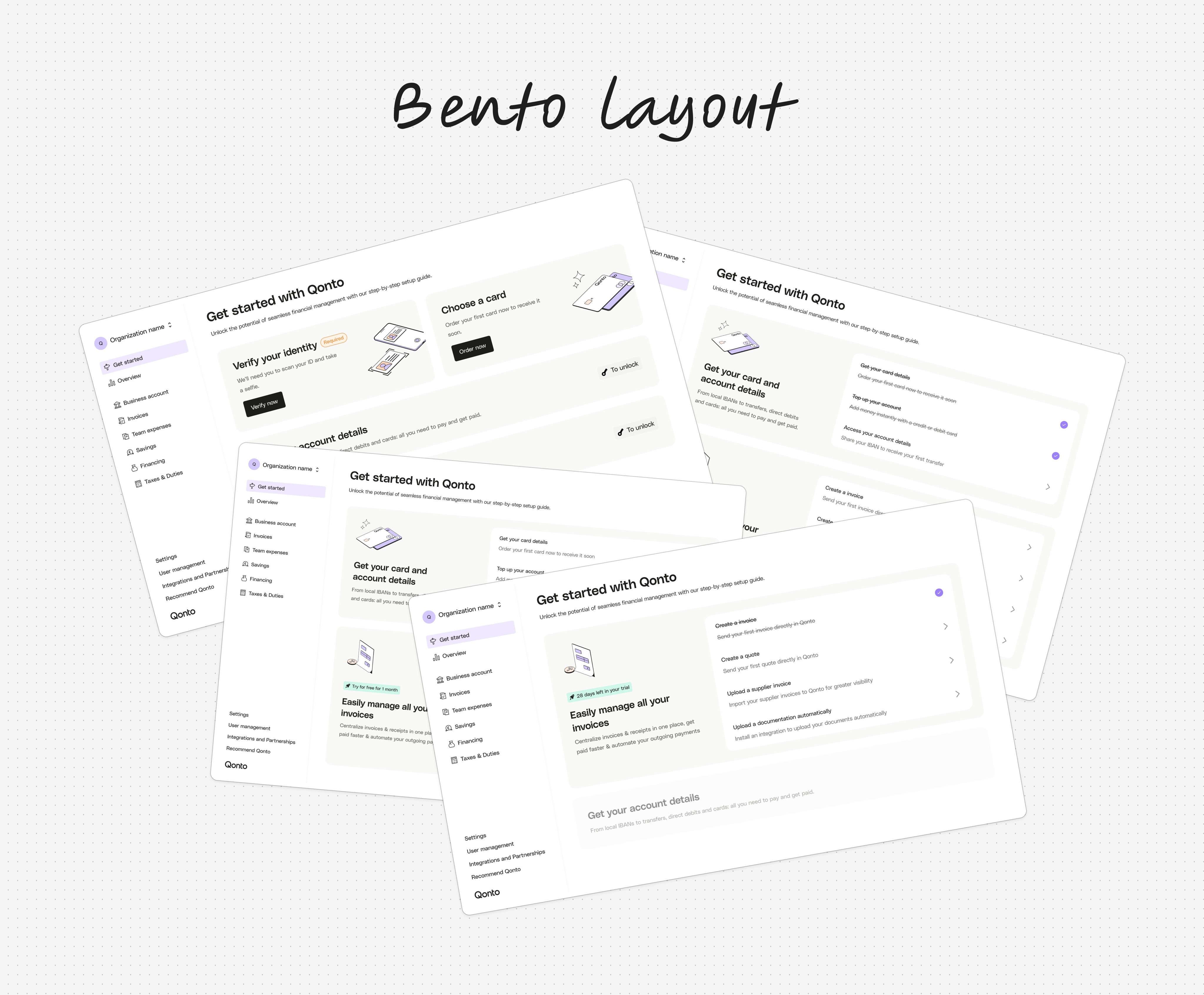
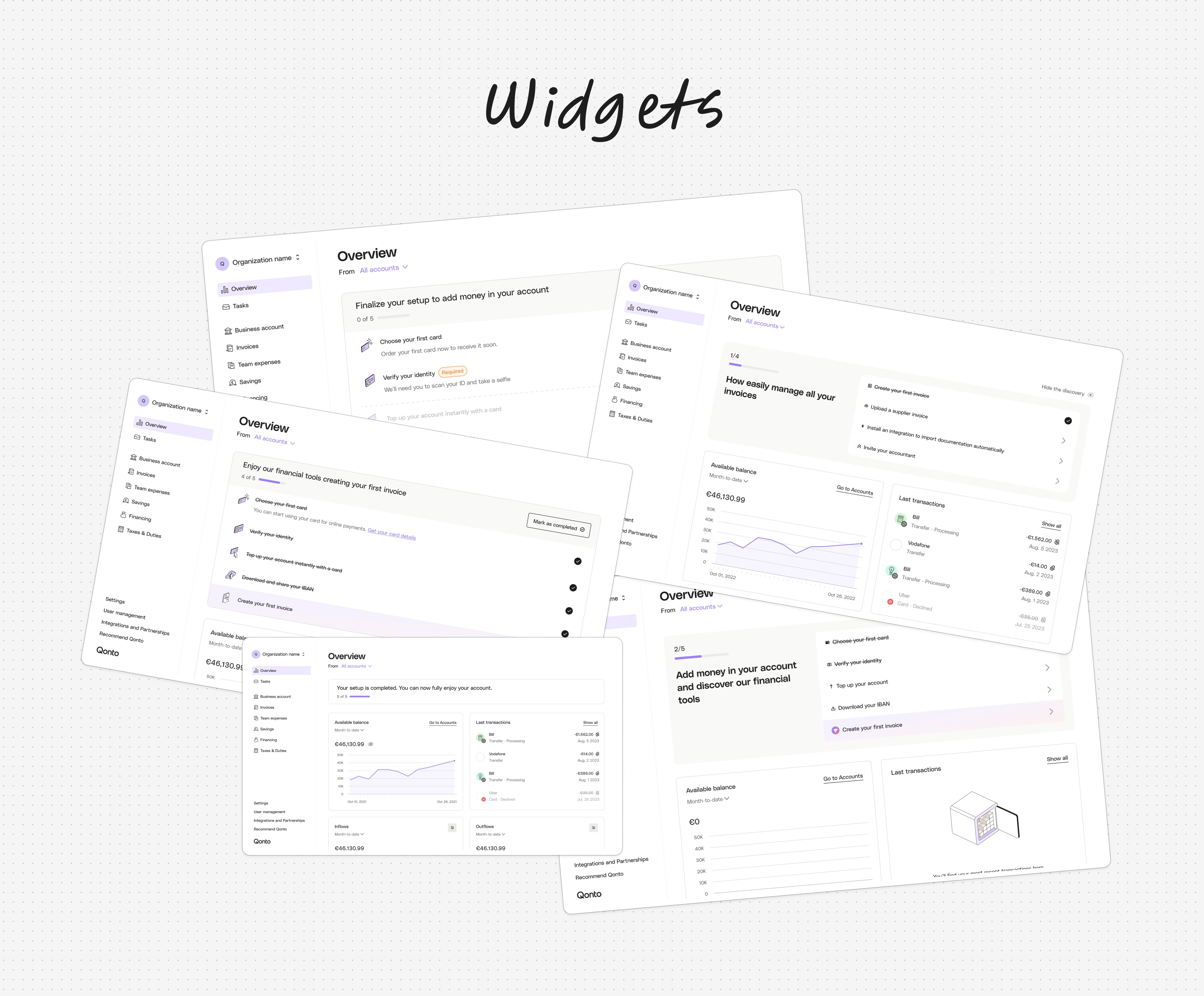
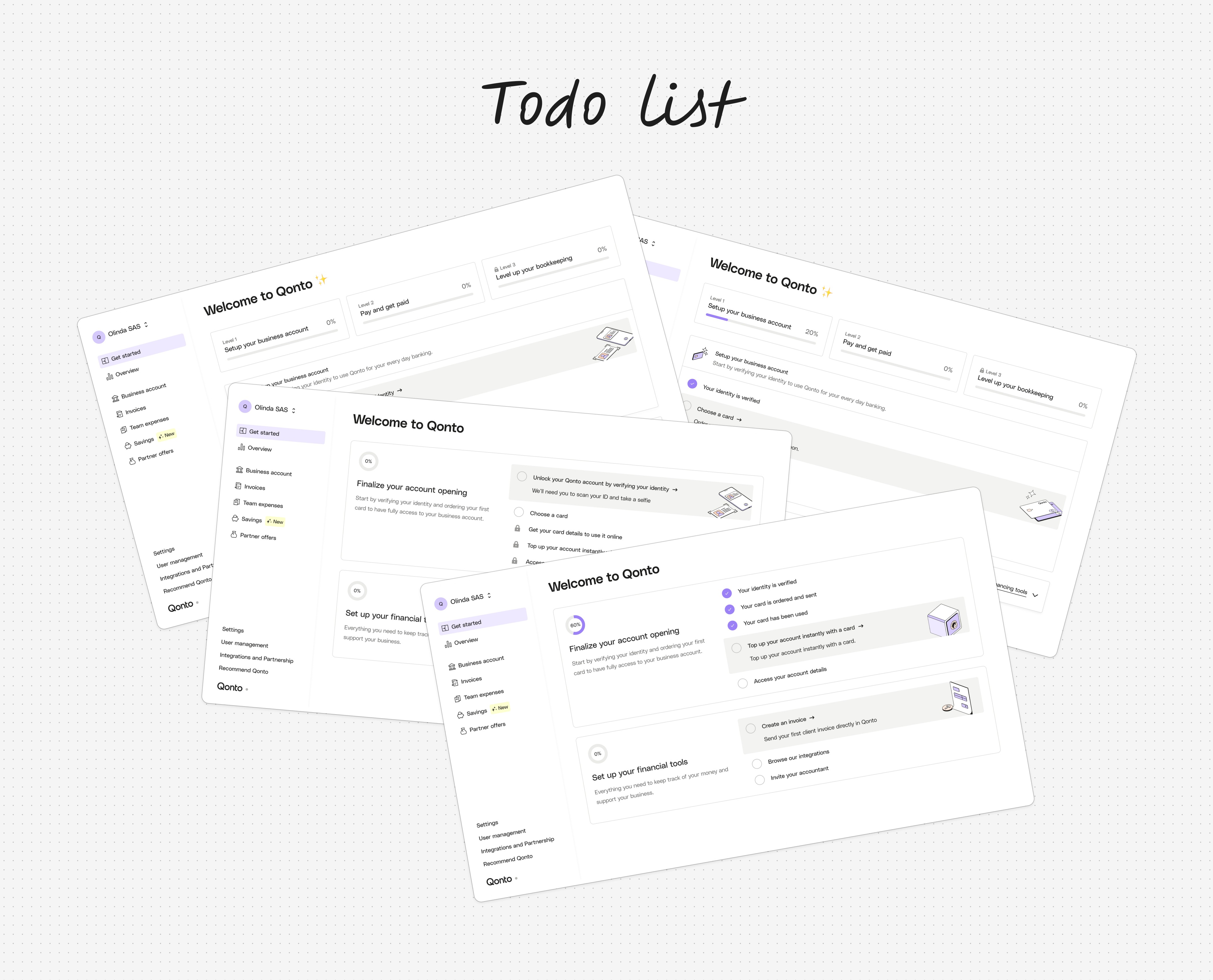
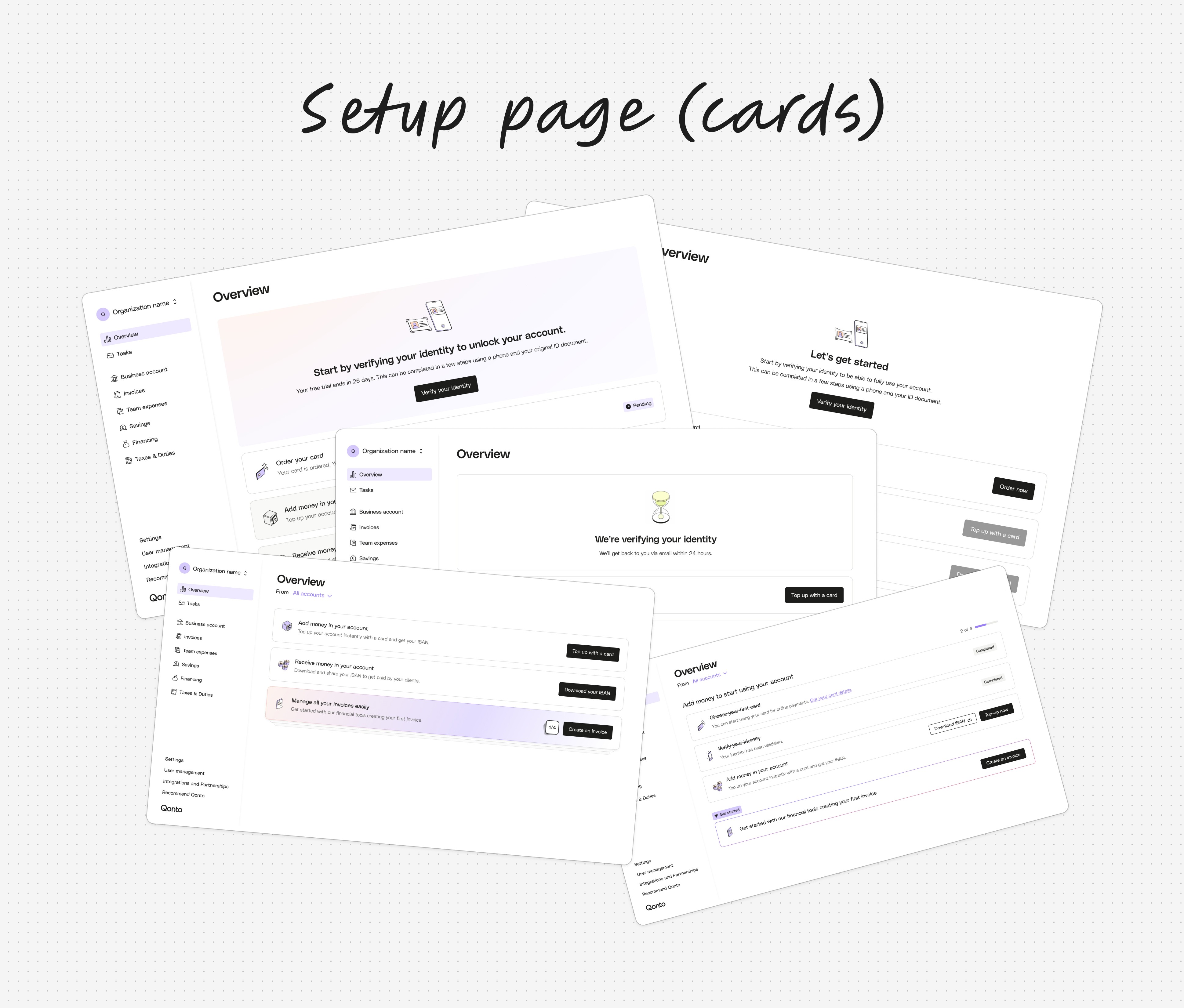
Lost in Iteration: Forgetting the Goal
Lost in Iteration: Forgetting the Goal
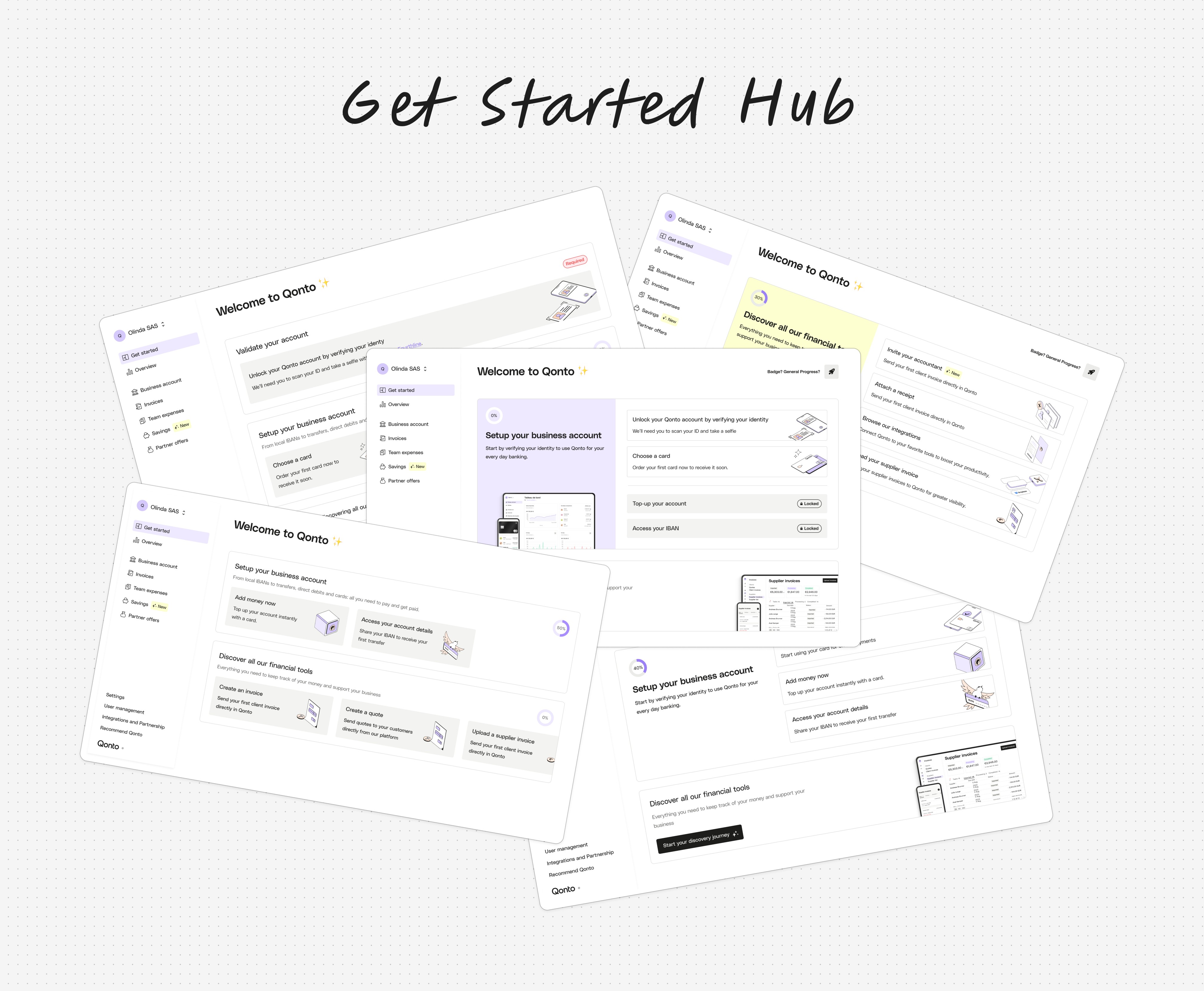
Early explorations attempted to merge activation and feature discovery into one unified experience, which led to confusion, weak prioritization, and cognitive overload.
Early explorations attempted to merge activation and feature discovery into one unified experience, which led to confusion, weak prioritization, and cognitive overload.
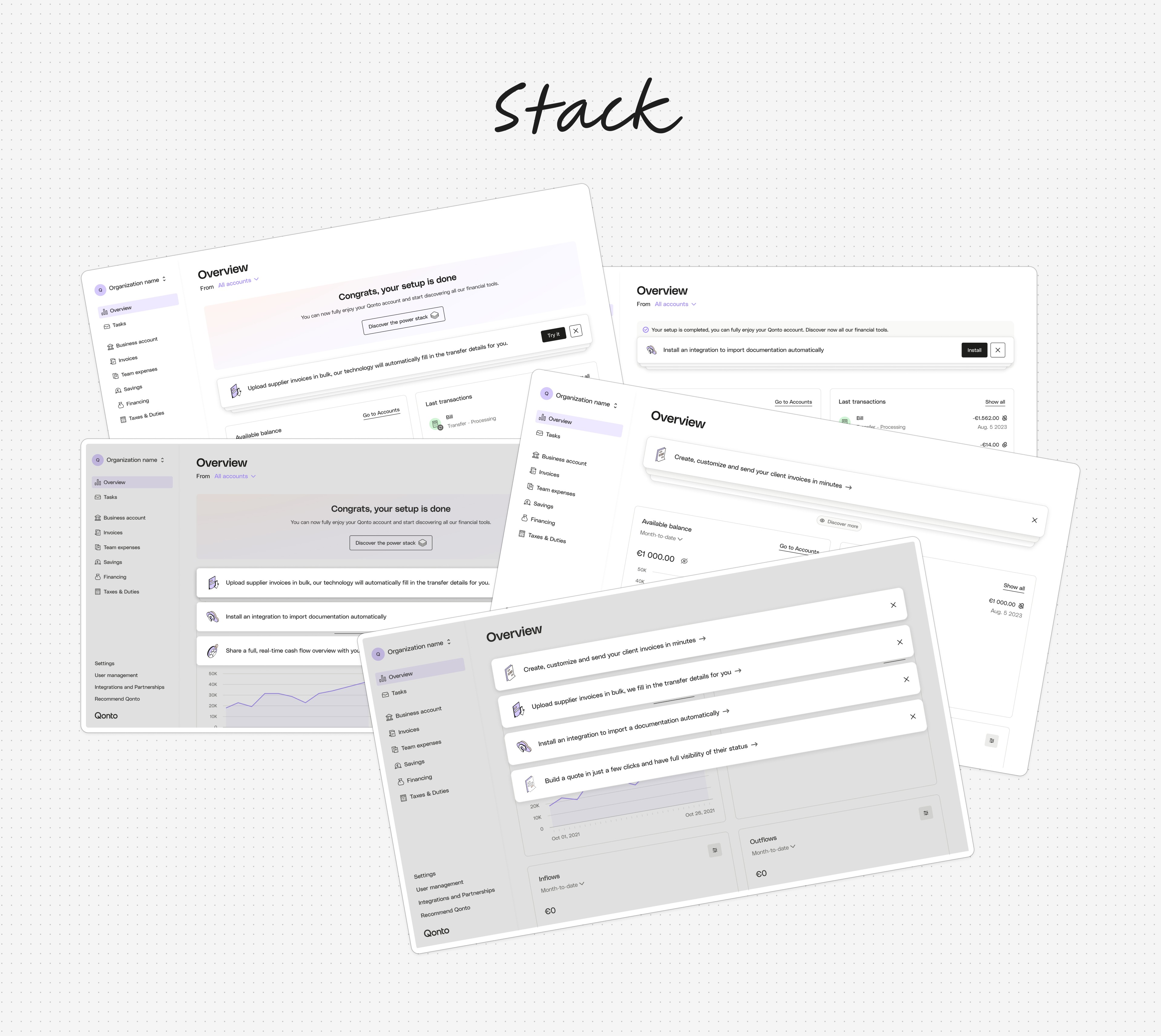
Iterative layouts testing, led us to re-scope the experience into two clear tracks: activation for speed, and engagement for depth.
Early explorations attempted to merge activation and feature discovery into one unified experience, which led to confusion, weak prioritization, and cognitive overload.
Iterative layouts testing, led us to re-scope the experience into two clear tracks: activation for speed, and engagement for depth.
System & Implementation
System & Implementation
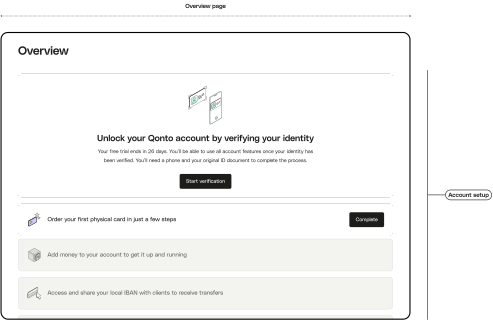
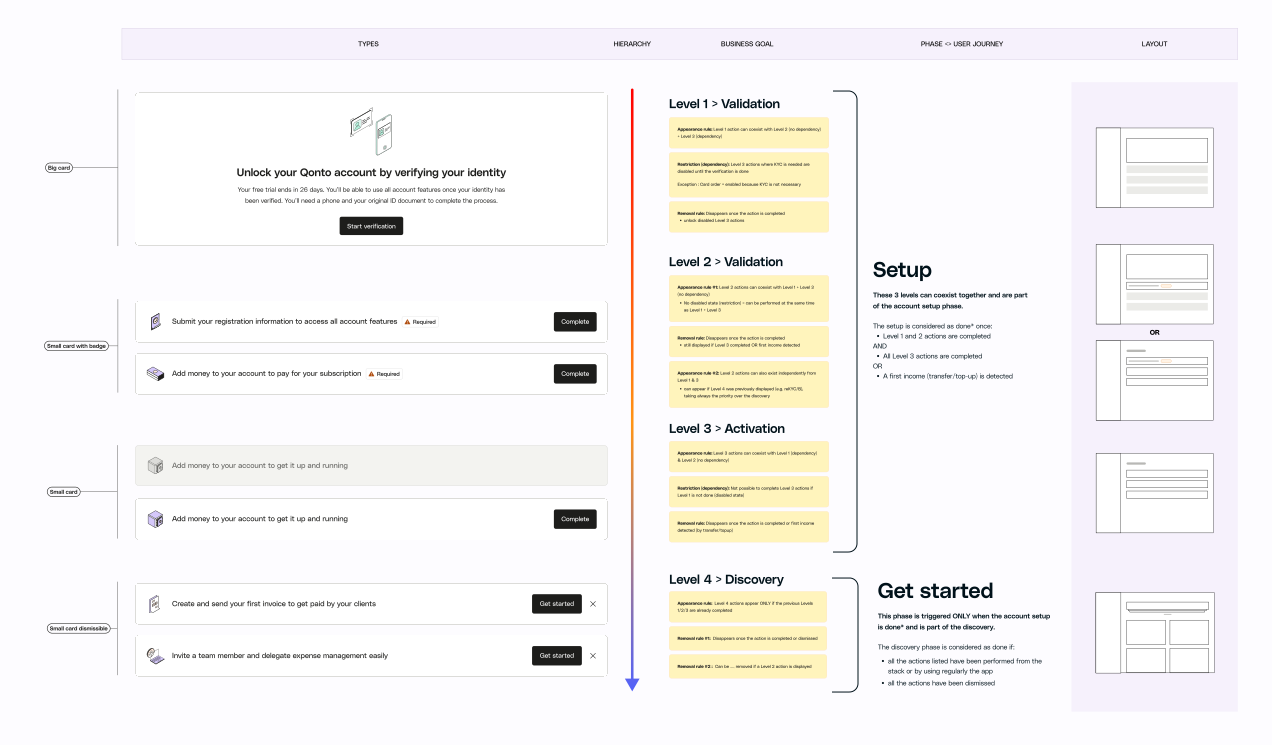
From concepts to components, the team built a modular discovery system.
By combining architectural thinking, content strategy, clear action hierarchy, and platform-specific UX, we simplified onboarding, ensured consistency, and drove user engagement.
From concepts to components, the team built a modular discovery system.
By combining architectural thinking, content strategy, clear action hierarchy, and platform-specific UX, we simplified onboarding, ensured consistency, and drove user engagement.
From concepts to components, the team built a modular discovery system.
By combining architectural thinking, content strategy, clear action hierarchy, and platform-specific UX, we simplified onboarding, ensured consistency, and drove user engagement.
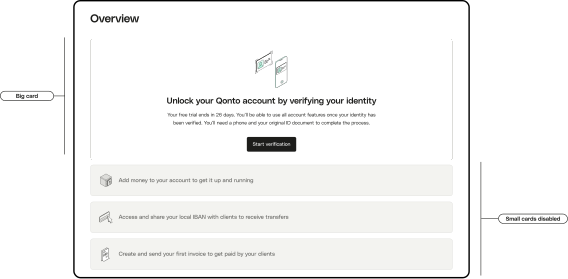
Unlock actions after KYC validation
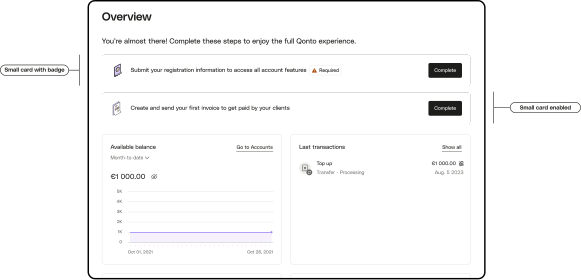
From Setup to Discovery
From Setup to Discovery



How teams scaled the system
How teams scaled the system
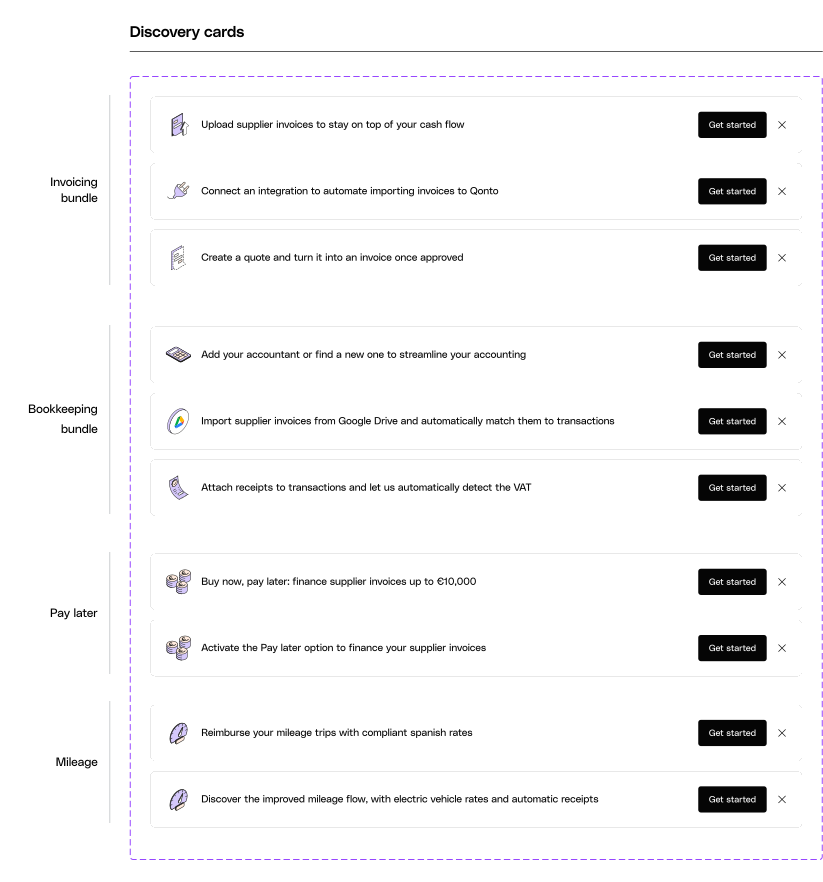
Multiple teams have built on the discovery card system, adapting it to offer contextual guidance tailored to their features, such as invoicing setup.
From first month activation to feature education, they've extended its impact far beyond the original scope.
Multiple teams have built on the discovery card system, adapting it to offer contextual guidance tailored to their features, such as invoicing setup.
From first month activation to feature education, they've extended its impact far beyond the original scope.
Level up documentation
Level up documentation
We leveraged Figma's component system to create a scalable, maintainable design framework.
The Product Discovery pattern became part of Qonto's broader design system, with reusable components, standardized across web and mobile.
We leveraged Figma's component system to create a scalable, maintainable design framework.
The Product Discovery pattern became part of Qonto's broader design system, with reusable components, standardized across web and mobile.
Discovery cards
Upload supplier invoices to stay on top of your cash flow
Get started
Connect an integration to automate importing invoices to Qonto
Get started
Create a quote and turn it into an invoice once approved
Get started
Add your accountant or find a new one to streamline your accounting
Get started
Buy now, pay later: finance supplier invoices up to €10,000
Get started
Activate the Pay later option to finance your supplier invoices
Get started
Import supplier invoices from Google Drive and automatically match them to transactions
Get started
Attach receipts to transactions and let us automatically detect the VAT
Get started
Reimburse your mileage trips with compliant spanish rates
Get started
Discover the improved mileage flow, with electric vehicle rates and automatic receipts
Get started
Bookkeeping bundle
Invoicing bundle
Pay later
Mileage
Discovery cards
Upload supplier invoices to stay on top of your cash flow
Get started
Connect an integration to automate importing invoices to Qonto
Get started
Create a quote and turn it into an invoice once approved
Get started
Add your accountant or find a new one to streamline your accounting
Get started
Buy now, pay later: finance supplier invoices up to €10,000
Get started
Activate the Pay later option to finance your supplier invoices
Get started
Import supplier invoices from Google Drive and automatically match them to transactions
Get started
Attach receipts to transactions and let us automatically detect the VAT
Get started
Reimburse your mileage trips with compliant spanish rates
Get started
Discover the improved mileage flow, with electric vehicle rates and automatic receipts
Get started
Bookkeeping bundle
Invoicing bundle
Pay later
Mileage
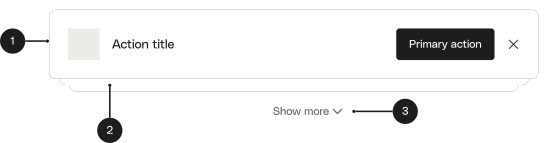
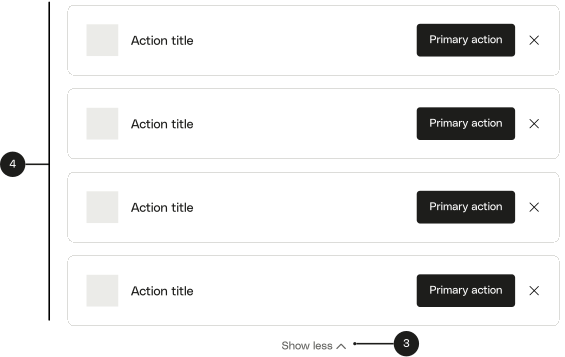
The design system now supports 20+ card types and continues to evolve, proving that thoughtful initial design creates lasting value.
Connect an integration to automate importing invoices to Qonto
Get started
Upload supplier invoices to stay on top of your cash flow
Get started
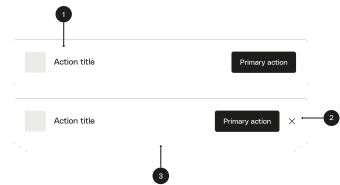
Action title
Primary action
Show more
2
1
3
Action title
Primary action
Action title
Primary action
Action title
Primary action
Action title
Primary action
Show less
4
3
Impact: Numbers tell the Story
Impact: Numbers tell the Story
The new Discovery System outperformed targets:
- Setup actions saw up to 42% click rates.
- Discovery actions reached 17.6%, far exceeding the original 9–17% baseline and driving stronger user engagement across the board.
- Discovery cards creation time cut from 0.5–1 full day to under 4 hours, enabling product teams to independently create actions across web and mobile.
The new Discovery System outperformed targets:
- Setup actions saw up to 42% click rates.
- Discovery actions reached 17.6%, far exceeding the original 9–17% baseline and driving stronger user engagement across the board.
- Discovery cards creation time cut from 0.5–1 full day to under 4 hours, enabling product teams to independently create actions across web and mobile.
The new Discovery System outperformed targets:
- Setup actions saw up to 42% click rates demonstrating that removing friction for users during registration is a good way to activate them more quickly.
- Discovery actions reached 17.6%, exceeding the original 9–17% baseline and driving stronger user engagement across the board.
- Discovery cards creation time cut from 0.5–1 full day to under 4 hours, enabling product teams to independently create actions across web and mobile.
The new Discovery System outperformed targets:
- Setup actions saw up to 42% click rates demonstrating that removing friction for users during registration is a good way to activate them more quickly.
- Discovery actions reached 17.6%, exceeding the original 9–17% baseline and driving stronger user engagement across the board.
- Discovery cards creation time cut from 0.5–1 full day to under 4 hours, enabling product teams to independently create actions across web and mobile.
KYC Verification Card
40% click rate, impacting 40,000 customers
40% click rate, impacting 40,000 customers
Share IBAN
42% click rate, impacting 24,000 customers.
42% click rate, impacting 24,000 customers.
Mobile Adoption
17% click rate, more than double the <8% baseline.
17% click rate, more than double the <8% baseline.
Magnificent illustrations by the talented Qonto Brand team 🫶🏻
KYC Verification Card
40% click rate, impacting 40,000 customers
Share IBAN
42% click rate, impacting 24,000 customers.
Mobile Adoption
17% click rate, more than double the <8% baseline.
A year of proof: timing matters
A year of proof: timing matters
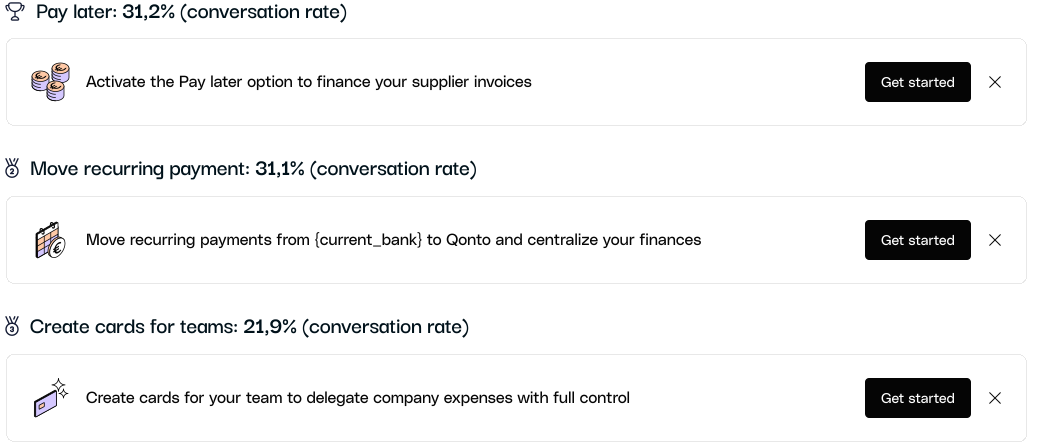
The data shows that contextual, action-triggered cards significantly outperform generic discovery cards, with conversion rates 5-10x higher when shown at the right moment in the user journey.
Example: Pay Later card is shown to users with low balance
(< €2,000)
The data shows that contextual, action-triggered cards significantly outperform generic discovery cards, with conversion rates 5-10x higher when shown at the right moment in the user journey.
Example: Pay Later card is shown to users with low balance (< €2,000)
The data shows that contextual, action-triggered cards significantly outperform generic discovery cards, with conversion rates 5-10x higher when shown at the right moment in the user journey.
Example: Pay Later card is shown to users with low balance (< €2,000)
The data shows that contextual, action-triggered cards significantly outperform generic discovery cards, with conversion rates 5-10x higher when shown at the right moment in the user journey.
Example: Pay Later card is shown to users with low balance (< €2,000)